Map one
Traditional clinical geography
Charts, points, channels, names, and practice relationships: a working map from a medical culture, not a literal anatomy overlay.

Acupuncture, meridians, and East Asian body maps
A guide to acupuncture, meridians, pressure points, moxa, gua sha, and East Asian body maps — handled as traditional practice maps with modern evidence and safety context, not guru certainty.
Map one
Charts, points, channels, names, and practice relationships: a working map from a medical culture, not a literal anatomy overlay.
Map two
Nerves, pain modulation, connective tissue, attention, expectation, and context help explain some effects without solving the whole map.
Bridge
When maps rhyme, the honest move is curiosity: what input, sensation, tissue, or regulation story might be worth testing?
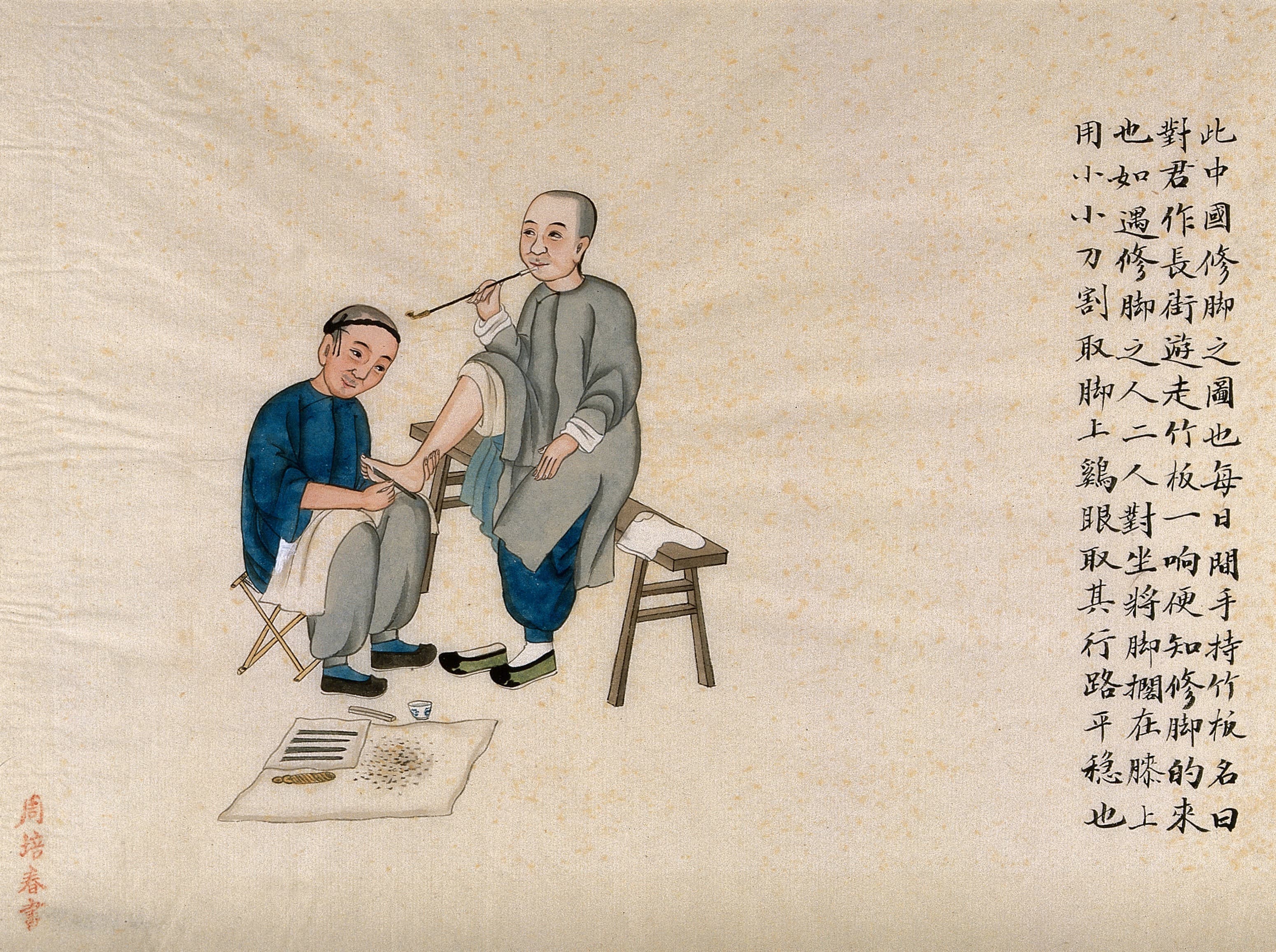
Practice scene
A care scene first; chart-reading, modern explanations, and careful limits come after.
Reading note 1
Read historical charts as practical maps, not literal anatomy.
Reading note 2
Use modern pain and sensation science as context without reducing meridians to nerves or fascia.
Reading note 3
Know when to seek licensed care, sterile tools, and medical evaluation instead.
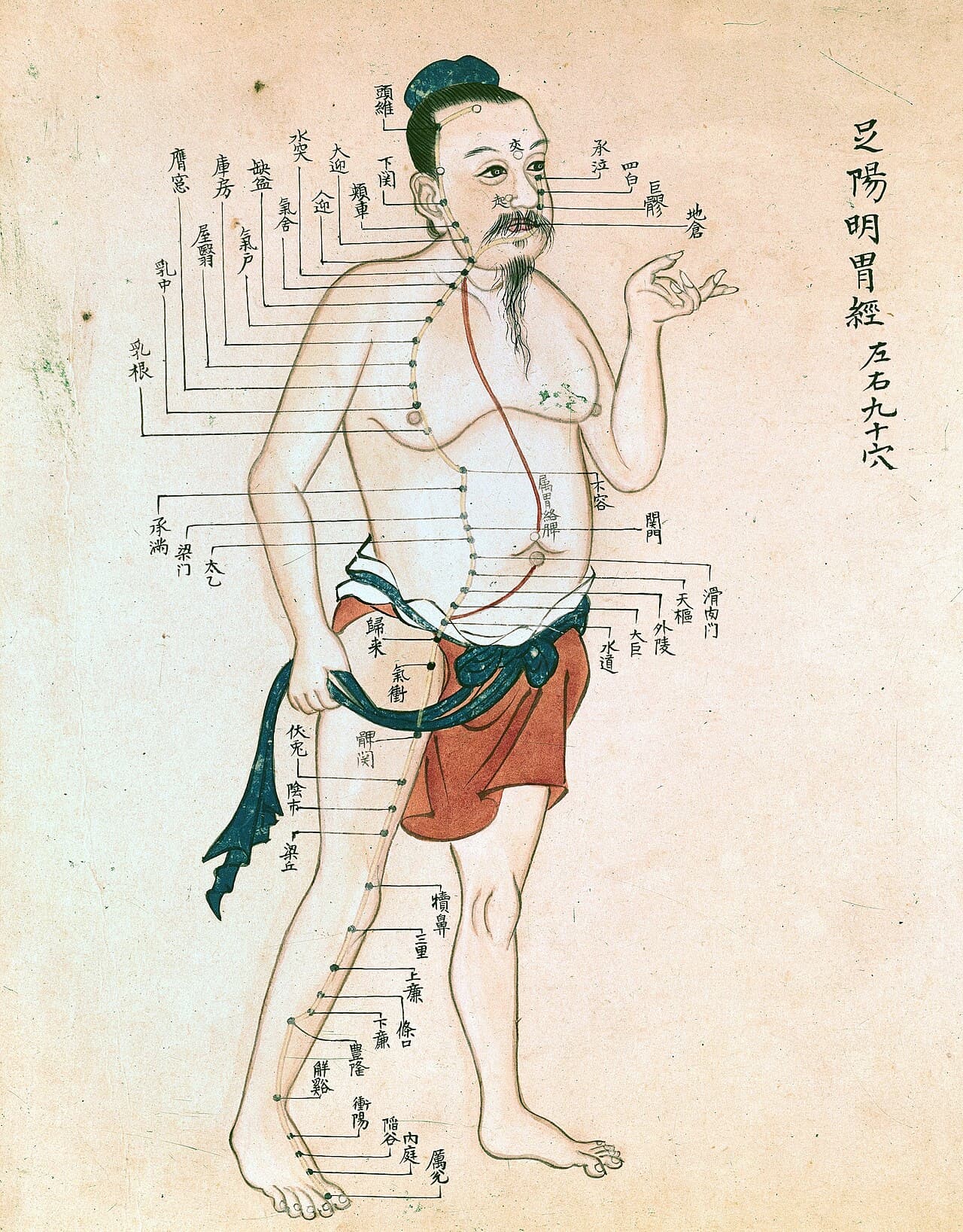
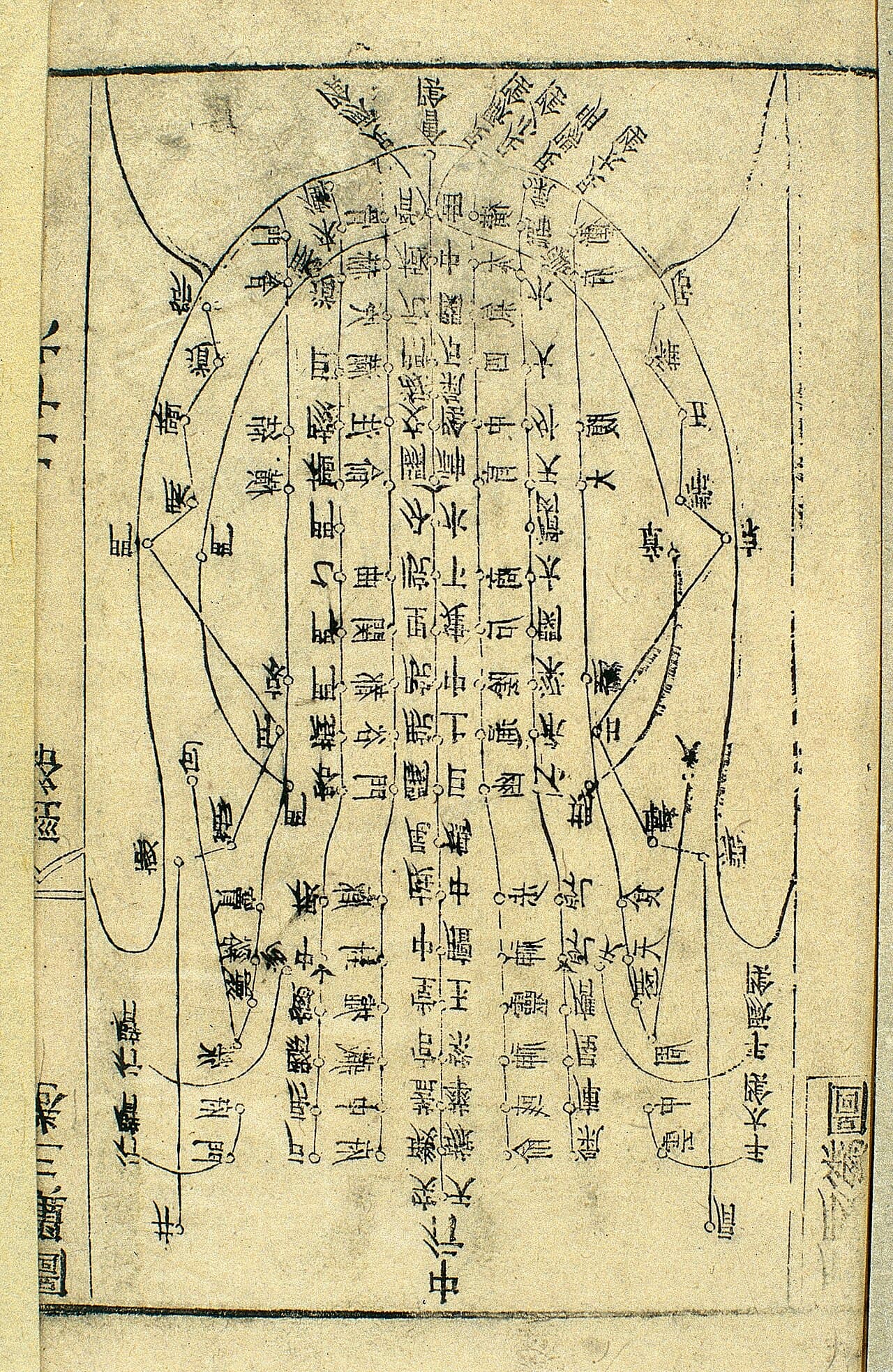
Source images: Wellcome Collection via Wikimedia Commons, Acupuncture chart with a series of points indicated on the body. Wellcome L0012239 and Acupuncture chart of chest and abdomen, 17th c. Chinese. Wellcome L0034709, licensed CC BY 4.0. Image cropped for this page; no endorsement implied.
Two maps of the body
Meridian maps and nerve maps are different body cartographies. They overlap in suggestive places, but neither should be reduced to the other. The useful question is how humans map invisible function: sensation, pain, regulation, attention, and tissue continuity. Hold both maps at once: traditional point geography on one side, modern sensory and tissue hypotheses on the other, with enough humility to keep curiosity separate from certainty.
How to read the chart
Look at the historical point chart first. Then bring in modern ideas about sensation, pain, tissue, and context without forcing the two systems to become the same map.
What you’re seeing
Old acupuncture charts from Wellcome/Commons.
What science adds
Pain, sensation, tissue, attention, and context.
What it does not prove
No claim that one map proves the other.
What to read, who to ask, what to buy later
History, clinical overviews, old maps, and cautious evidence reviews before buying anything.
Licensing, sterile single-use needles, realistic outcome tracking, and do-not-delay-care boundaries.
Acupressure mats, point tools, ear seeds, maps, and books can be useful, but each deserves a separate look at claims and safety.
When to be careful
This page is educational. Acupuncture should be performed by an appropriately licensed practitioner using sterile, single-use needles. Do not use it to delay urgent medical evaluation, diagnosis, or evidence-based care.