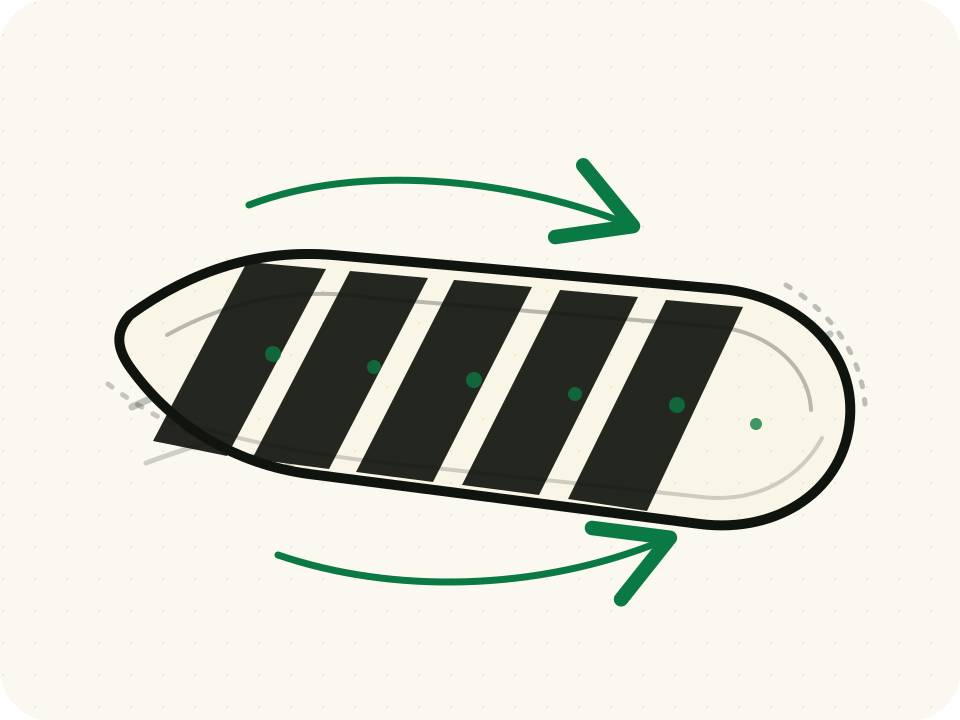
Band + movement, not band alone
The useful editorial frame is pressure plus active motion and reassessment, not tighter wrapping for its own sake.

Bands, focal pressure, and loaded movement for people who want better inputs — without turning a simple recovery tool into a miracle claim.
The interesting frontier is not just wrapping a joint. It is whether compression plus movement can challenge tissue interfaces while the body is doing the thing that feels restricted. That makes FlossPoint especially worth tracking.
The useful editorial frame is pressure plus active motion and reassessment, not tighter wrapping for its own sake.
A good protocol should make space for stop signs: numbness, tingling, color change, weird pain, or no useful reassessment change.

Focal ShearPoints, loaded-movement protocols, and a founder story rooted in clinical athlete work. This stays separate from the general mechanism visuals so the page does not confuse one product with the whole category.
Compression flossing sits between mobility practice, self-massage, and athletic prep. The best version is active: wrap, move through the pattern, reassess, and stop if the signal gets weird.
Standard floss bands are the minimum-effective-tool version: inexpensive latex strips that can change sensation and short-term range for some users. FlossPoint is the more editorially interesting version because it adds removable contact points and a specific directional-shear thesis.
The product category should reward specificity and humility. We should penalize vague recovery claims, aggressive dosing, and anything that implies compression can replace strength, graded exposure, motor control, medical care, or good programming.
A floss band creates pressure and sensory input. The useful question is what happens when you move through the specific range that feels limited, not whether tighter wrapping feels more intense.
The editorial lens here is fascia, skin, muscle interfaces, and proprioception: tissue layers need to glide under load, not just feel looser on a table or after passive pressure.
Numbness, tingling, color change, or chasing pain are not badges of honor. Short applications, moderate tension, and reassessment fit the Whole Body Catalog stance.
Compression flossing can be useful in practice, but claims should stay modest: movement quality, temporary range change, proprioception, and tissue tolerance — not guaranteed rehab outcomes.
FlossPoint was built by Dr. Kyle Bowling, founder of Kentucky Sports Clinic and team chiropractor for University of Kentucky Athletics. His origin story is unusually aligned with WBC: athletes could look mobile on the table, then hit a squat, lunge, RDL, push-off, or running pattern and have the same restriction return under load.
In 2019 he developed the CTM Band — a compression band with removable contact points — after using musculoskeletal ultrasound to think about tissue-layer behavior during movement. FlossPoint is presented as the refined version: higher-tension band, denser textured ShearPoints, and protocols for common lower-extremity restrictions.