Thera Cane Massager

Thera Cane

Thera Cane Massager

$40

4.7(6 reviews)
massage canetrigger pointback spineneck shouldermanualmade in usabudget friendly
View at Rogue Fitness →

External seller link. Confirm price, availability, and terms on the seller site.

Quick answer

Use Thera Cane as the category anchor for manual massage canes: cheaper and more durable than a massage gun, more reachable than a ball, but not magic. Dose gently and avoid direct pressure that creates numbness, zinging, or symptom spread.

Decision rail

Fit snapshot

Thera Cane / Sticks & Rollers · Thera Cane Massager

Not a rating. A buying boundary.

Use when

People who want reachable pressure for traps, upper back, mid-back, and shoulder-adjacent areas

Start here if the fit problem matches your real use case.

Skip if

You want passive comfort with no learning curve; this takes positioning and pressure control

A useful catalog should also tell you when not to buy.

Evidence posture

Practice-based evidence posture

Claim details live below; do not read this as a cure or performance promise.

Buying context

$40 · reviewed Jun 2026

Compare the tool against simpler alternatives before paying for features.

Use Thera Cane as the category anchor for manual massage canes: cheaper and more durable than a massage gun, more reachable than a ball, but not magic. Dose gently and avoid direct pressure that creates numbness, zinging, or symptom spread.

Compare retailers

Where this tool actually fits

Target area map for Thera Cane Massager.

For browsing and safe-use context, not diagnosis. Start with common targets, treat caution zones as optional and gentler, and skip avoid zones.

Specs below

Surface map

Conservative zones, not anatomy precision.

category fallback

3

common

2

caution

3

avoid

Front

Chest, abdomen, quads, hip flexor side of the body.

3 cues
Forearmcommon
Hand / wristcaution
Front neck / throatavoid

Back

Upper back, spine-adjacent tissues, glutes, hamstrings, calves.

4 cues
Glute / posterior hipcommon
Scapula / rear shouldercaution
Direct spineavoid
Behind the kneeavoid

Side

Outer hip, lateral thigh, side ribs, and other side-body areas.

0 cues

No target cue listed for this surface.

Plantar

Bottom of foot and sole contact only.

1 cue
Plantar footcommon

The surface labels are intentionally coarse. They help decide whether this tool belongs near an area at all; they do not diagnose symptoms, prescribe treatment, or mark exact anatomical structures.

Common targets

Likely fit when pressure stays tolerable and the area is a broad muscle or simple contact surface.

Plantar foot

Plantar

A small ball can provide easy-to-scale plantar-foot pressure while standing, sitting, or leaning lightly.

Dose cue: Start seated or with partial weight; retest foot comfort or gait afterward.

Glute / posterior hip

Back

Glute and posterior-hip tissues are broad enough to adjust pressure with a wall or floor setup.

Dose cue: Use the wall first if floor pressure turns into bracing.

Forearm

Front

Forearm pressure can be dosed on a desk or wall when symptoms are local and non-neurological.

Dose cue: Use short contact, light pressure, and retest grip or wrist motion.

Use caution

Smaller, sensitive, bony, nerve-rich, or easy-to-overdose areas. Start gentler or choose another tool.

Scapula / rear shoulder

Back

Upper-back ball work can be useful but gets intense quickly near ribs, shoulder blade edges, and the neck.

Try instead: Use a softer ball or wall setup before floor pressure.

Hand / wrist

Front

Hands and wrists contain small joints, tendons, and nerves; pressure should stay light and specific.

  • Stop with numbness, tingling, or spreading symptoms.

Avoid

Not a good self-massage target for this tool without qualified clinical guidance.

Front neck / throat

Front

Do not use a firm ball on the front neck, throat, or carotid area.

Direct spine

Back

Do not pin a firm ball directly on the spine or bony processes.

Behind the knee

Back

Behind the knee is nerve- and vessel-rich and is not a good firm-ball pressure target.

Claim boundary: Self-massage tools can provide pressure, sensory input, short-term comfort, and movement-awareness practice. They are not cures, tissue-repair devices, injury treatments, or substitutes for medical care, rehab, sleep, training changes, or progressive loading.

Stop rule: Stop if pressure causes sharp pain, numbness, tingling, spreading symptoms, dizziness, unusual swelling, skin irritation, discoloration, or worse movement afterward.

Product sensation scale

Thera Cane Massager pressure dose

tolerable point

Orient

Light contact, breathing, and body-map attention before adding intensity.

map first

Useful input

Clear sensation that still lets you breathe, relax, and retest movement.

retest after

Strong dose

Brief, specific, and optional. Do not make pain-chasing the default setting.

short only

Back off

Numbness, guarding, sharp pain, swelling, or worse motion means stop and reassess.

stop / reassess

Dose by breath and retest, not by pain. This is a sensation map for self-maintenance tools, not treatment advice.

Measurement check

What these specs change.

Use the known numbers and missing readings to decide fit, pressure dose, and transition demand before buying.

How to use these measurements

Use this to judge pressure dose before buying.

Thera Cane Massager is being evaluated for how it delivers pressure: contact width, material hardness, and whether the intensity can stay breathable.

Buying decision:Choose this kind of tool if firm pressure still lets you breathe and retest movement. Skip it if the useful sensation quickly turns into guarding, numbness, or pain chasing.

What we know

Bench data: not captured yet

The relevant variables can be explained now, but pressure dose should not be scored until the exact attachment is measured.

Still needed

Contact hardness

Contact hardness is still unpublished, so it needs the right durometer or compression test instead of repeating “high density” copy.

shore durometer

Contact hardness

Not captured yet

WBC bench task

Next measurement: Use the appropriate durometer scale for the material: Shore A/D for rubber/plastic, Shore OO/C or compression testing for foams.

Hardness explains why a tool feels useful, tolerable, or too aggressive better than generic ‘deep tissue’ copy.

contact area

Contact patch / diameter

Not captured yet

WBC bench task

Next measurement: Record diameter or contact patch under light bodyweight so pressure dose is visible.

Small contact areas concentrate pressure; broad rollers distribute it.

Editorial take

Who this is really for

Evidence: Practice-basedReviewed: Jun 2026

Manual pressure tools are best framed as practice-supported ways to apply tolerable pressure and body awareness. They may temporarily change comfort or perceived tension, but product-specific injury-risk or inflammation claims are not established.

Use Thera Cane as the category anchor for manual massage canes: cheaper and more durable than a massage gun, more reachable than a ball, but not magic. Dose gently and avoid direct pressure that creates numbness, zinging, or symptom spread.

Best for

  • People who want reachable pressure for traps, upper back, mid-back, and shoulder-adjacent areas
  • Users who prefer a non-electric tool with more leverage than a small massage ball
  • Home or office routines where a durable manual tool beats a battery-powered gadget

Avoid if

  • You want passive comfort with no learning curve; this takes positioning and pressure control
  • You have unexplained pain, numbness, radiating symptoms, acute injury, or fragile skin
  • You need broad pressure on legs or hips where a roller or larger ball may be simpler

Pros

  • Reaches areas most balls and sticks miss without help from another person
  • No battery, charger, app, or motor noise
  • Longstanding simple design with low replacement risk

Cons

  • Can feel fiddly until you learn the angles
  • Easy to overdo pressure if you chase sensitive spots aggressively
  • Large-handed or larger-bodied users may prefer a different cane shape

Where to Buy

Rogue FitnessPrimary Source
MassageWarehouse

Used, handmade & local

Marketplace links refresh through WBC's used-market endpoint, but listings are still external search pages — not endorsements.

API fallback

Marketplace caveat

  • Marketplace results are live search pages, not WBC endorsements. Verify condition, returns, shipping, and whether the listing is the actual item rather than accessories.

About

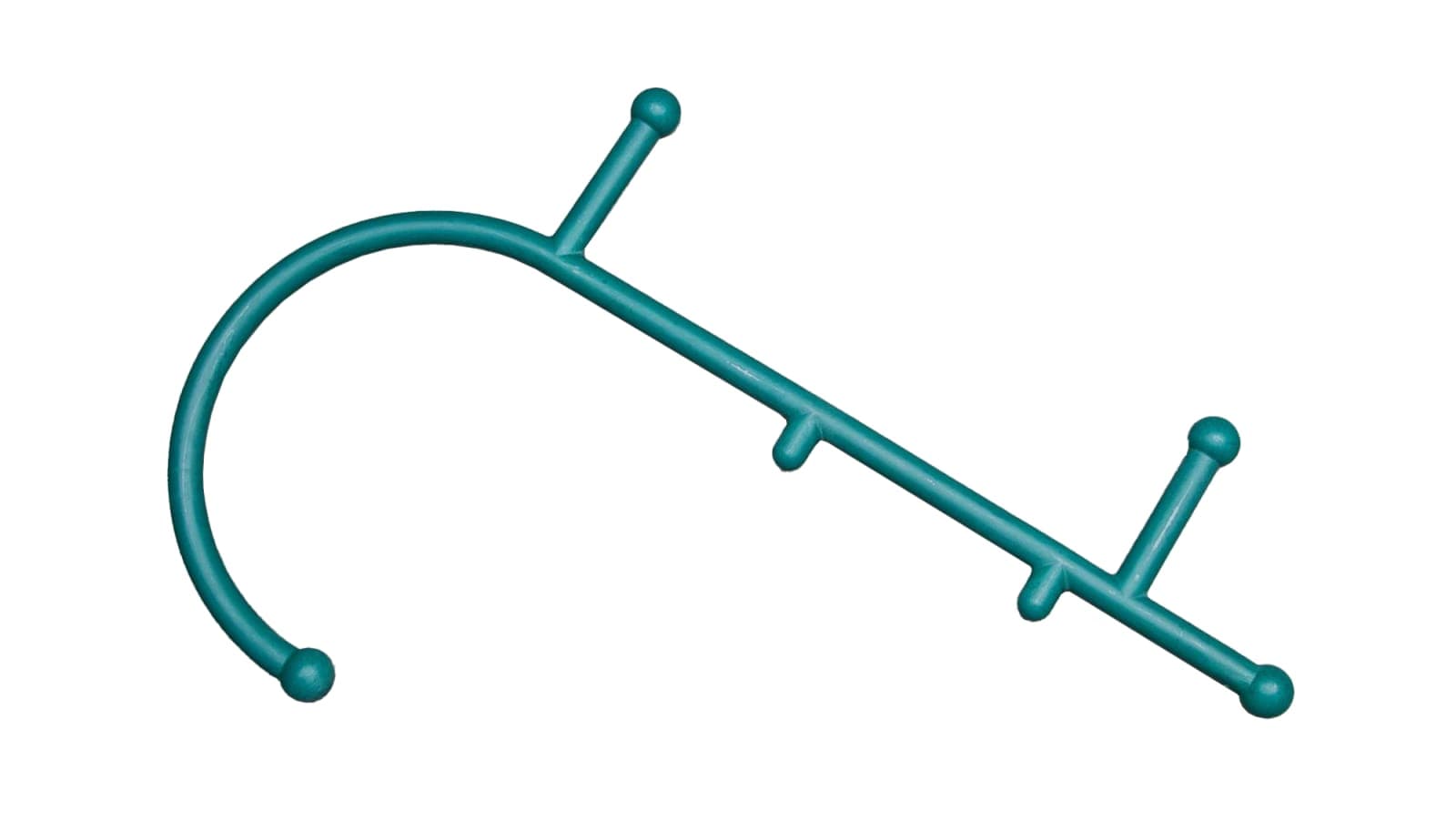
A classic hook-shaped self-massage cane with six pressure nodes for reaching the upper back, traps, mid-back, and other areas that are awkward to address with a ball or roller.

Highlights

  • Six pressure nodes
  • 24 in x 15 in x 1 in
  • 1.2 lb tool weight
  • Made in USA

What People Say

A simple leverage tool for hard-to-reach pressure work; useful if you are patient enough to learn positioning and dose.

Specs

Category
Sticks & Rollers
Updated
Jun 2026

Frequently Asked Questions

What is Thera Cane Massager for?

Thera Cane Massager is for targeted pressure and self-massage in areas that are hard to reach with a foam roller, especially smaller arm or hand tissues. Treat it as a sensory and mobility support, not a guaranteed fix for pain, tendons, nerves, or overuse injuries.

How should you use Thera Cane Massager?

Use short, tolerable doses: light-to-moderate pressure, slow breathing, and a small area at a time. Start with 30–60 seconds on a spot, then reassess grip, range of motion, or comfort. More pressure is not automatically better.

When should you skip Thera Cane Massager?

Skip targeted pressure over acute injury, swelling, numbness, tingling, bruising, irritated skin, or symptoms that worsen with compression. If symptoms are sharp, spreading, neurological, or persistent, get assessed instead of trying to press through them.

Who is Thera Cane Massager best for?

Thera Cane Massager is best for people who want reachable pressure for traps, upper back, mid-back, and shoulder-adjacent areas; users who prefer a non-electric tool with more leverage than a small massage ball; home or office routines where a durable manual tool beats a battery-powered gadget. Use that as a fit signal, not a promise that the tool will solve the problem by itself.

Who should avoid Thera Cane Massager?

Consider skipping Thera Cane Massager if you want passive comfort with no learning curve; this takes positioning and pressure control; you have unexplained pain, numbness, radiating symptoms, acute injury, or fragile skin; you need broad pressure on legs or hips where a roller or larger ball may be simpler. A simpler, cheaper, or lower-intensity option may be better if the use case is not clear.

What does the evidence say about sticks & rollers like Thera Cane Massager?

Manual pressure tools are best framed as practice-supported ways to apply tolerable pressure and body awareness. They may temporarily change comfort or perceived tension, but product-specific injury-risk or inflammation claims are not established.

More Sticks & Rollers

AcuCurve Cane
4.5
Sticks & Rollers$trigger pointself massageback reachergonomicback spineneck shoulder

AcuCurve Cane

$30
TriggerPoint
Sticks & Rollers
RAD Rod
4.9
Sticks & Rollers$massage stickportablefirm pressureergonomicit band legforearm arm

RAD Rod

$39
RAD
Sticks & Rollers
Universal Massage Roller
4.3
Sticks & Rollers$massage stickportablebudget friendlyversatileit band legforearm arm

Universal Massage Roller

$20
SKLZ
Sticks & Rollers
Nano Foot Roller
4.5
Sticks & Rollers$trigger pointportablesmallbudget friendlyfoot plantar

Nano Foot Roller

$20
TriggerPoint
Sticks & Rollers
Armaid
4.4
Sticks & Rollers$$firm pressureforearm armergonomicmade in usaself massage

Armaid

$83
Armaid
Sticks & Rollers
Roleo
4.3
Sticks & Rollers$forearm armhand wristportableergonomicself massage

Roleo

$52
Roleo
Sticks & Rollers